
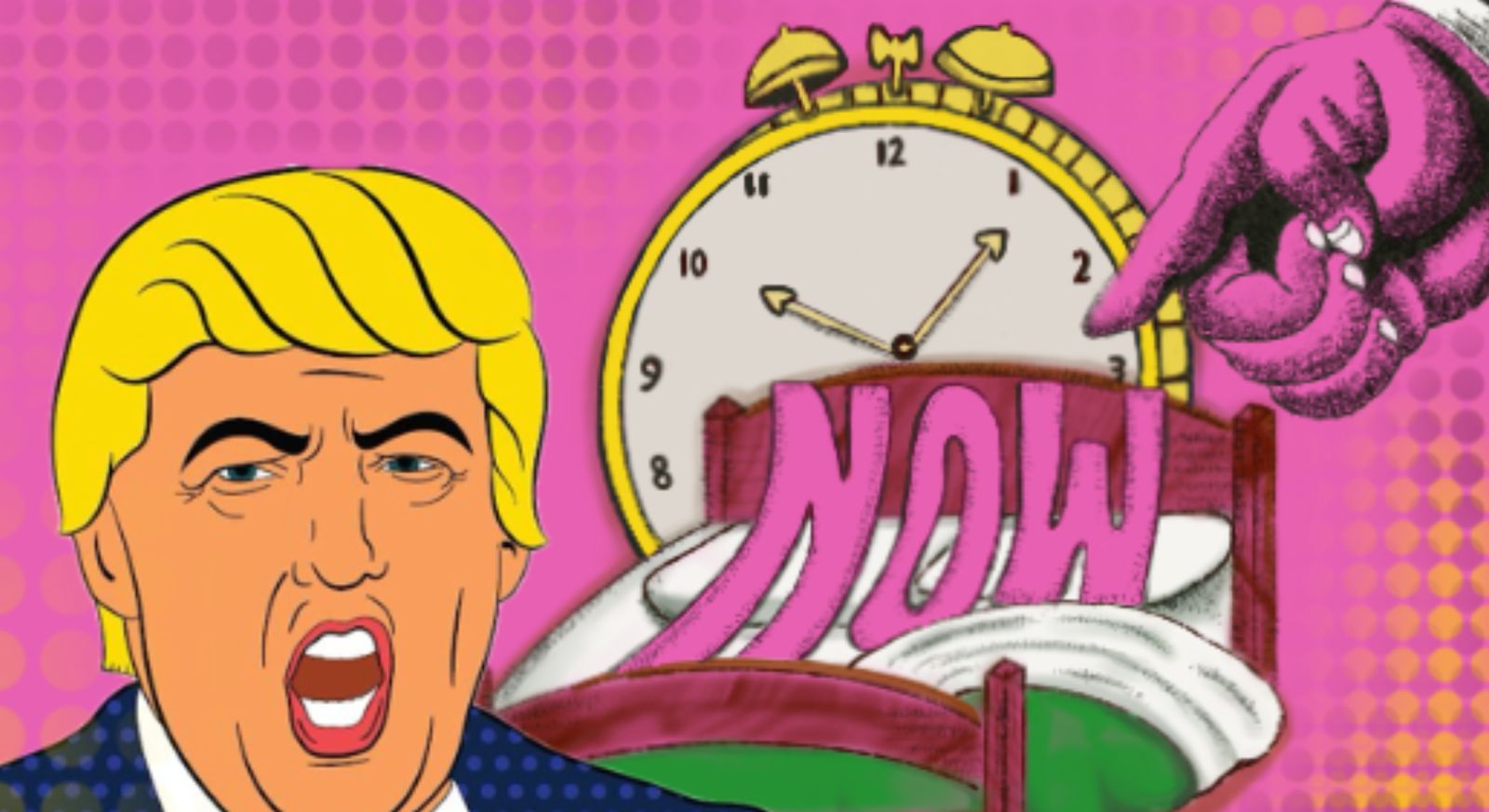
The Great De-Wokening: Corporate America’s Dance with the Devil
In the mid-2010s, corporate America briefly flirted with the idea of moral responsibility. CEOs talked about “stakeholder capitalism,” brand campaigns dripped with progressive values, and some companies even tied executive compensation to climate and diversity goals. It was the golden age of woke capitalism—where businesses tried to sell you deodorant and social change in the same breath.
But 2025 feels different. The pendulum swung. DE&I (Diversity, Equity, and Inclusion) is no longer the buzzword in boardrooms—it’s a liability. ESG has been politicized. And after Trump’s 2024 landslide win, the business world is walking on eggshells, dodging the cultural crossfire. Welcome to the age of the Great De-Wokening, where silence is corporate America’s loudest statement.
Panic at the Disco
It wasn’t too long ago that the Business Roundtable declared a shift from shareholder primacy to stakeholder capitalism. Companies like Nike and Patagonia turned purpose into profit, banking on the idea that younger, more progressive consumers wanted brands with a conscience.
But somewhere between #BlackLivesMatter and rainbow flags, the cracks began to show. Critics from both ends of the spectrum accused companies of hypocrisy. Progressives saw empty promises, while conservatives decried “woke capitalism” as pandering gone rogue. Then came the backlash—the Bud Light commercial with Dylan Mulvaney, the Jaguar rebranding disaster, Target’s Pride displays, and a string of anti-woke boycotts that sent executives scurrying for cover.
Disney found itself in the crosshairs too. CEO Bob Iger, after returning to the helm, sought to steer the company away from the “woke” label. In multiple public statements, he emphasized Disney’s focus on entertainment rather than advancing political agendas. “Our primary mission needs to be to entertain and then, through our entertainment, to continue to have a positive impact on the world. It should not be agenda-driven,” he remarked during the 2023 DealBook Summit. Despite his efforts, Disney continues to face criticism from social conservatives who cite examples like LGBTQ+ characters in movies and diverse casting choices as evidence of an agenda.
The «Just Business» Excuse
Let’s be clear: businesses aren’t suddenly apolitical because they believe in the sanctity of neutrality. They’re scared. Scared of becoming the next viral target of Fox News or X mobs. Scared of lawsuits challenging DE&I initiatives as reverse discrimination. Scared of shareholder revolts if ESG funds underperform. Scared of the new POTUS.
Donald Trump’s executive orders, signed just hours after his inauguration, have added to this climate of fear. These orders systematically dismantle federal DE&I programs, eliminate funding for environmental justice initiatives, and roll back protections against discrimination based on gender identity or sexual orientation. By declaring there are “only two genders” and revoking previous equity-focused directives, the administration is shaping a new reality that corporate America must navigate carefully.
In some cases, companies are outright dismantling the structures they once flaunted. Meta, for instance, recently axed its DEI team, citing the “charged” nature of the term. Walmart and Toyota have scaled back on employee resource groups and cultural events. Even BlackRock, the once-champion of ESG, is downplaying the acronym in favor of “sustainability” or other euphemisms.
The irony, of course, is that many of these same companies still rely on diverse, global workforces and markets for their survival. Yet acknowledging this openly has become taboo, lest they risk being labeled as “woke.”
How to read Donald Duck (ref. libro biblia para los comms)
Trump’s return to the White House is fanning the anti-woke flames. His administration is poised to dismantle federal DE&I policies, weaponize the Civil Rights Division against so-called preferential hiring practices, and reward corporations that toe the line of his anti-progressive agenda. It’s a chilling environment for any company with a social conscience—or even mildly progressive HR and marketing teams.
For corporate leaders, the message is clear: keep your head down, focus on profits, and avoid anything that remotely resembles a stance. Activism, once a buzzword in Silicon Valley boardrooms, is now a dirty word.
The backlash of the backlash
The Great De-Wokening might feel like a pragmatic retreat, but it’s scaringly short-sighted. Gen Z and Millennials—the demographic cohorts driving consumption—overwhelmingly support brands that align with their values. Companies betting on nostalgia and neutrality risk alienating future markets in favor of appeasing short-term political or financial pressures.
Moreover, the challenges of climate change, racial inequality, and global instability aren’t going away. They’re becoming more urgent. Companies that abdicate their roles in addressing these issues may find themselves ill-prepared for the crises of the future.
It´s oh so quiet, it´s oh so still (Ref. Bjork)
Interestingly, some companies are adopting a stealth approach. They’re doing the work—diversifying leadership, reducing carbon footprints, funding social initiatives—but without the press releases and the hashtags. These businesses understand that purpose still matters; they’re just no longer advertising it.
Disney’s Iger encapsulates this sentiment. While he distances the company from overt political messaging, he continues to champion stories that reflect diverse perspectives. “Black Panther” and “Coco” are prime examples of how entertainment can foster acceptance without being “agenda-driven.” Yet, even this quiet approach continues to draw ire from some quarters.
The Great De-Wokening forces us to confront a harsh truth: for all the talk of “stakeholder capitalism,” most companies are still driven by short-term profits and risk aversion. They’ll do what’s expedient, not necessarily what’s right.
But perhaps this moment also presents an opportunity for a new kind of corporate leadership—one that doesn’t seek applause or shy away from controversy but acts decisively because it’s the right thing to do. After all, the true measure of leadership isn’t what you do when it’s easy; it’s what you do when it’s hard.
In a world teetering on the edge of crisis, the question isn’t whether companies will engage with social issues but how. The era of performative activism is over. Now comes the hard part: doing the work—quietly, consistently, and with the understanding that true change rarely comes with applause.
At Horse, we’ve always believed that true leadership lies not in pandering to the loudest voices, but in cutting through the noise with clarity and conviction. The Great De-Wokening isn’t just a retreat—it’s a reminder of the pitfalls of performative gestures and the power of genuine intent.
As companies stumble over the politics of virtue, the opportunity lies in embracing complexity, asking hard questions, and making choices that matter. At the intersection of bold ideas and sharp execution, Horse champions the leaders who dare to think smarter, act braver, and prioritize long-term value over fleeting applause. Because in a world of cautious silence, the boldest move is simply to mean what you say—and do what you mean.